Born in 1977 in Dreux, France, Arnauld Le Calvé is a French sculptor whose work combines ceramics and blown glass. Drawn to working with materials from an early age, he trained as a glassmaker through apprenticeships in various French workshops between 2003 and 2006. From 2007 to 2008, he worked as an assistant at the International Centre for Research on Glass and Visual Arts (CIRVA) in Marseille, where he participated in the production of the Kachinas, a series of glass pieces designed by Ettore Sottsass and inspired by the ritual figures of the Hopi people. This experience marked an early encounter with totemic forms, which would later occupy an important place in his work.
In 2011, Arnauld Le Calvé established his own glassblowing studio near Toulouse. From 2014 onwards, he began exploring ceramics independently, discovering new creative possibilities in clay. He gradually developed a distinctive technique involving blowing glass directly into previously fired and reheated grogged stoneware forms. Built using coils or slabs, his sculptures are worked with slips, natural clays, and minerals such as sand. The encounter between these two materials, whose properties and technical demands differ considerably, became the foundation of his artistic language.
Architecture was an important source of inspiration in his early explorations. Particularly fascinated by the bubble houses of Pascal Haüsermann, Arnauld Le Calvé imagined organic, enveloping forms reminiscent of utopian dwellings. His interest in Art Brut and Art Singulier, as well as in the works of Robert Tatin, Ferdinand Cheval, known as the Postman Cheval, and Gérard Lattier, informed a free and instinctive approach to sculpture. During this period, he favoured the natural textures of clay, rounded volumes, and a relatively restrained colour palette, allowing the material itself to play an essential role in shaping his forms.
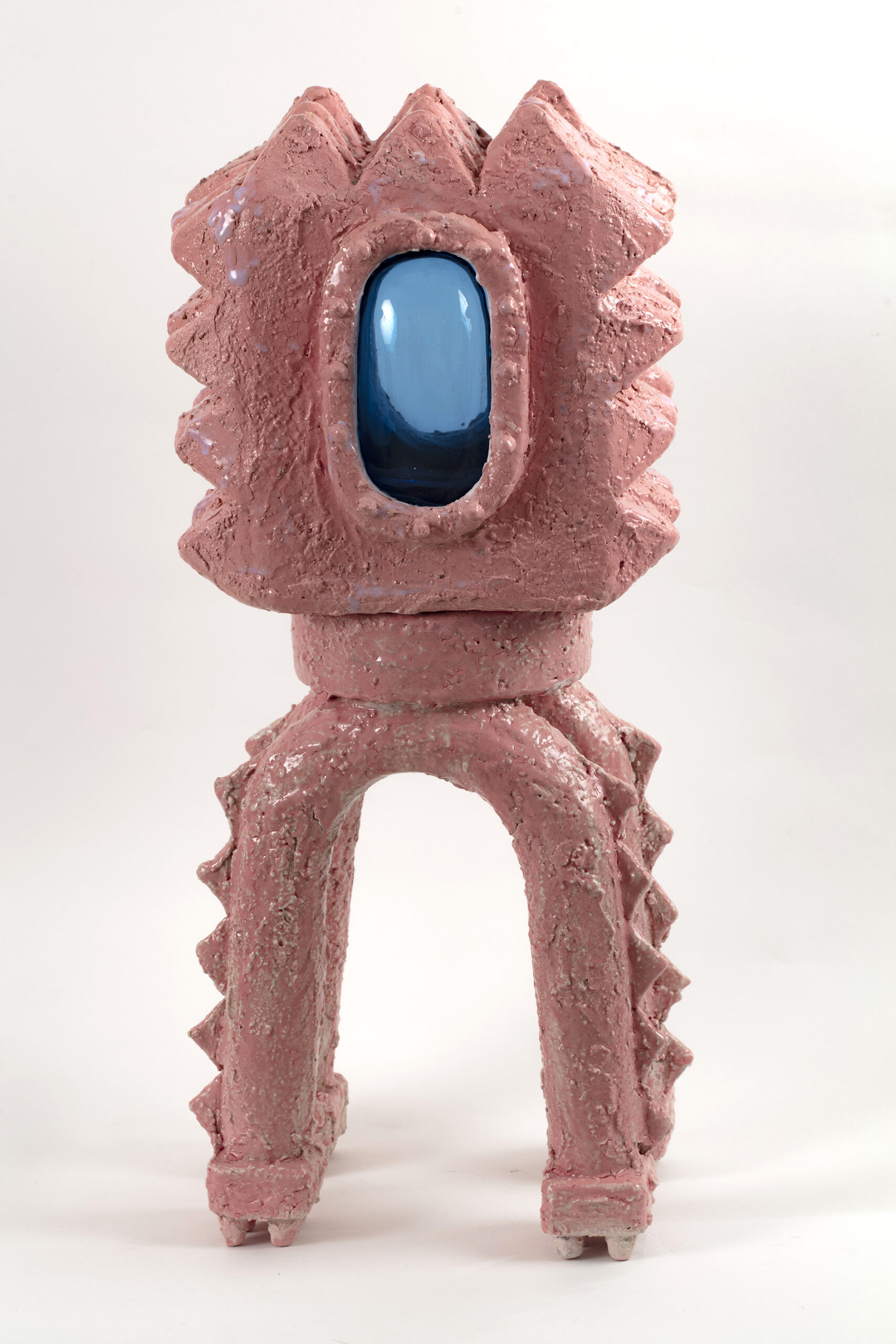
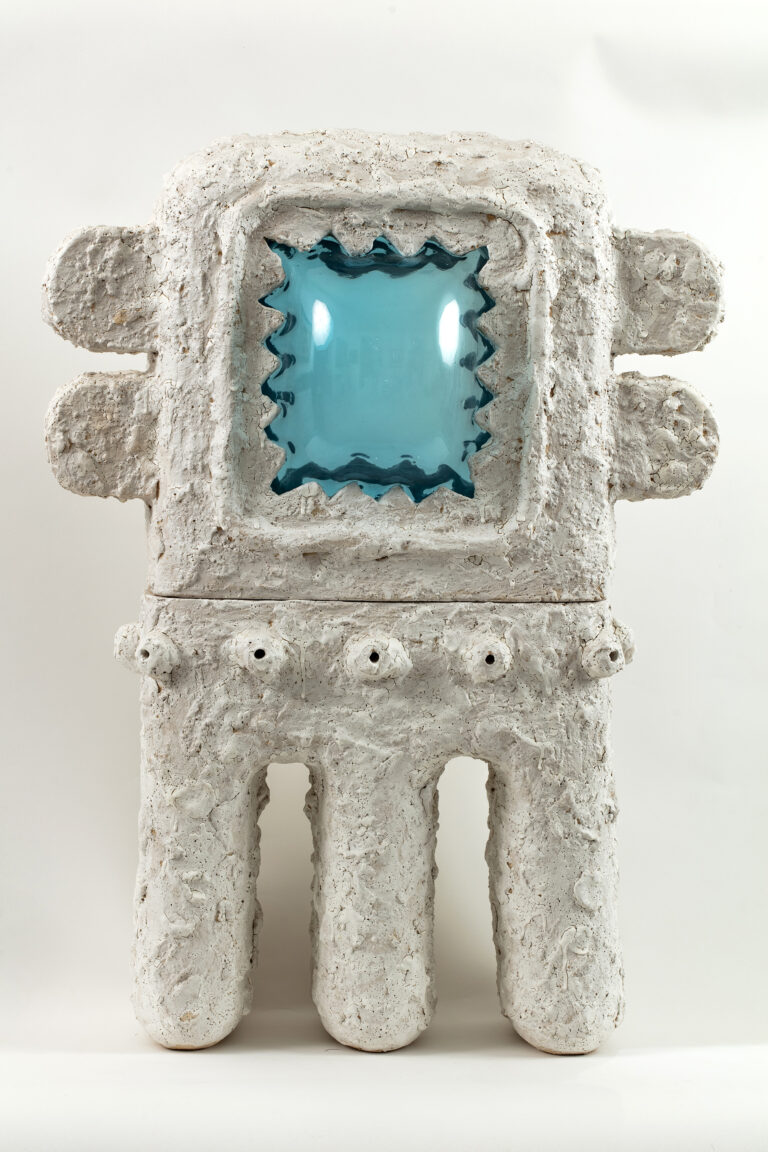
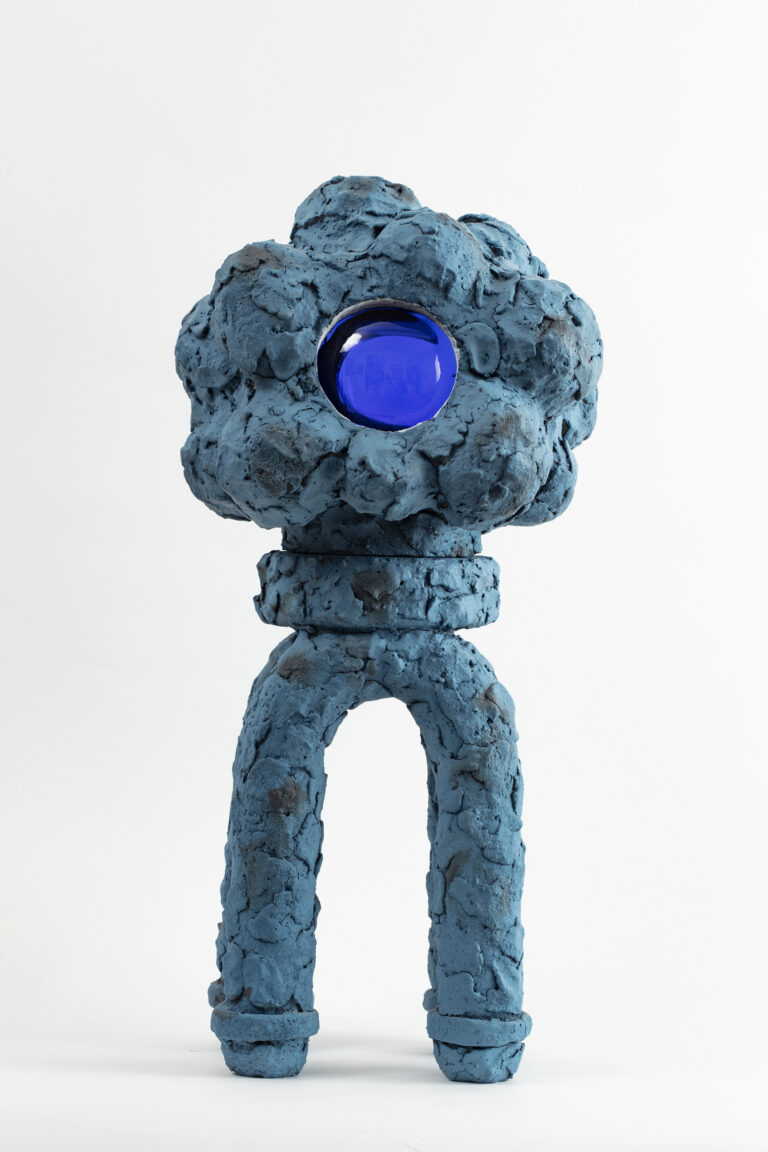
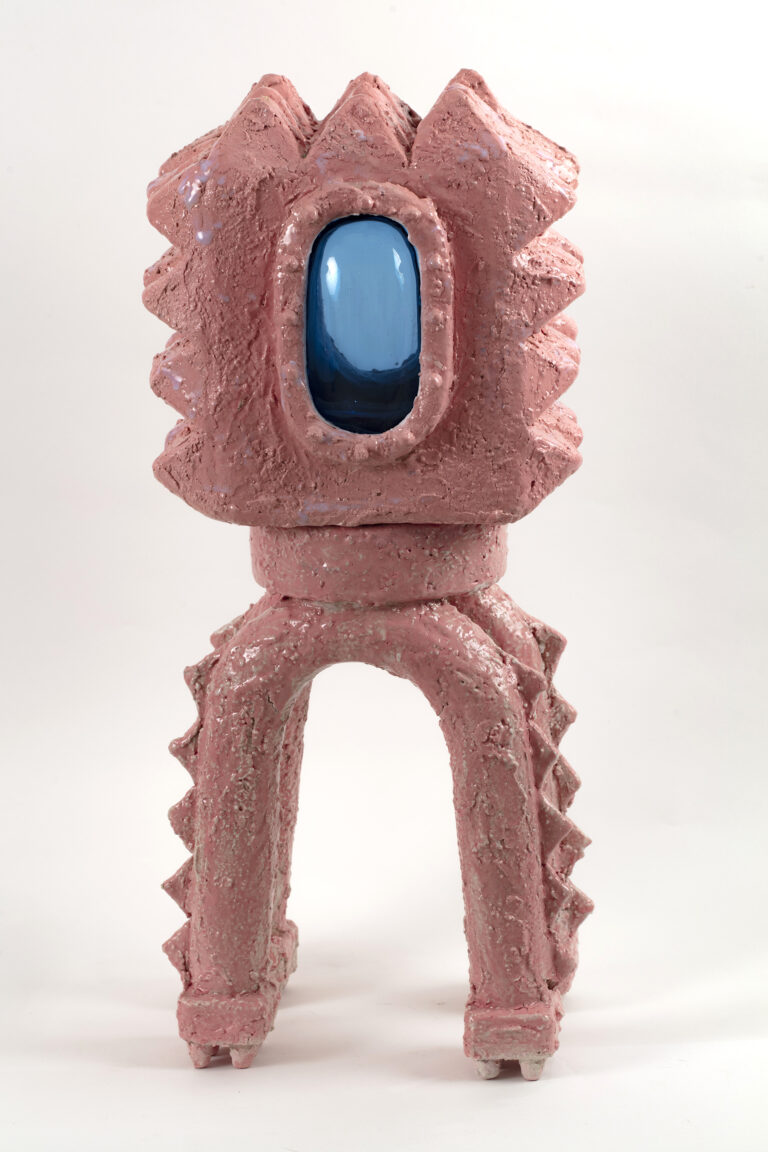
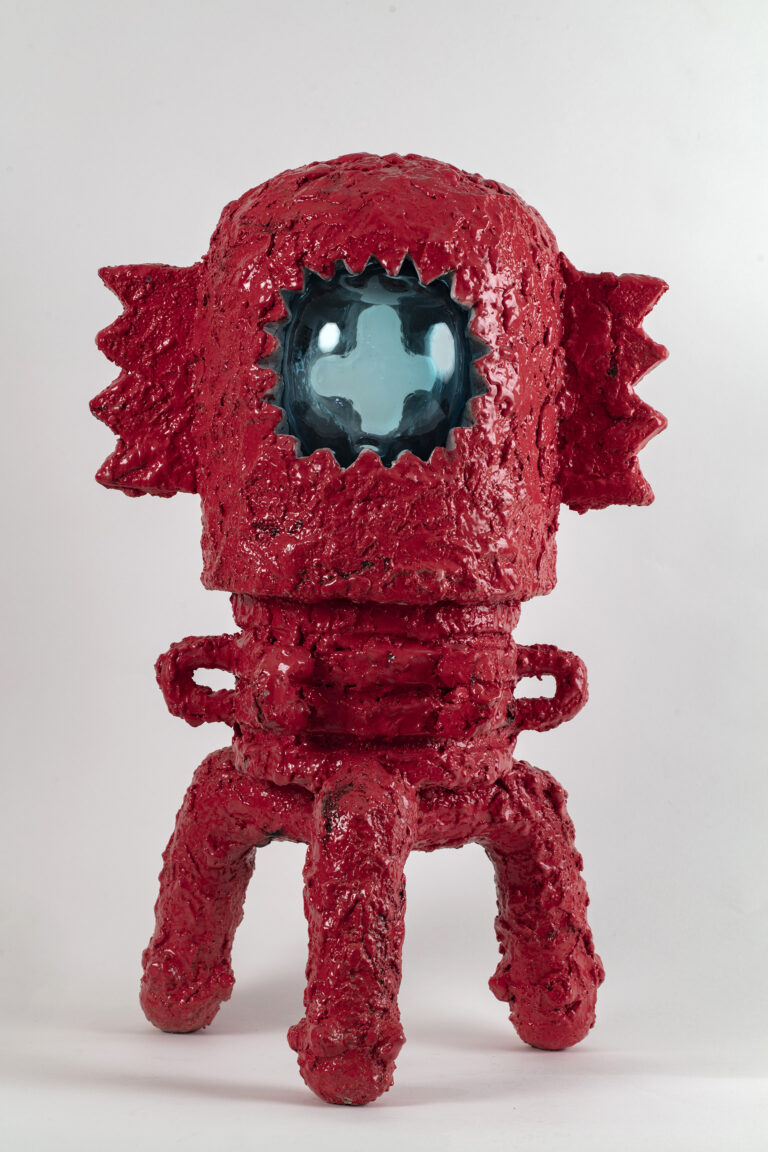
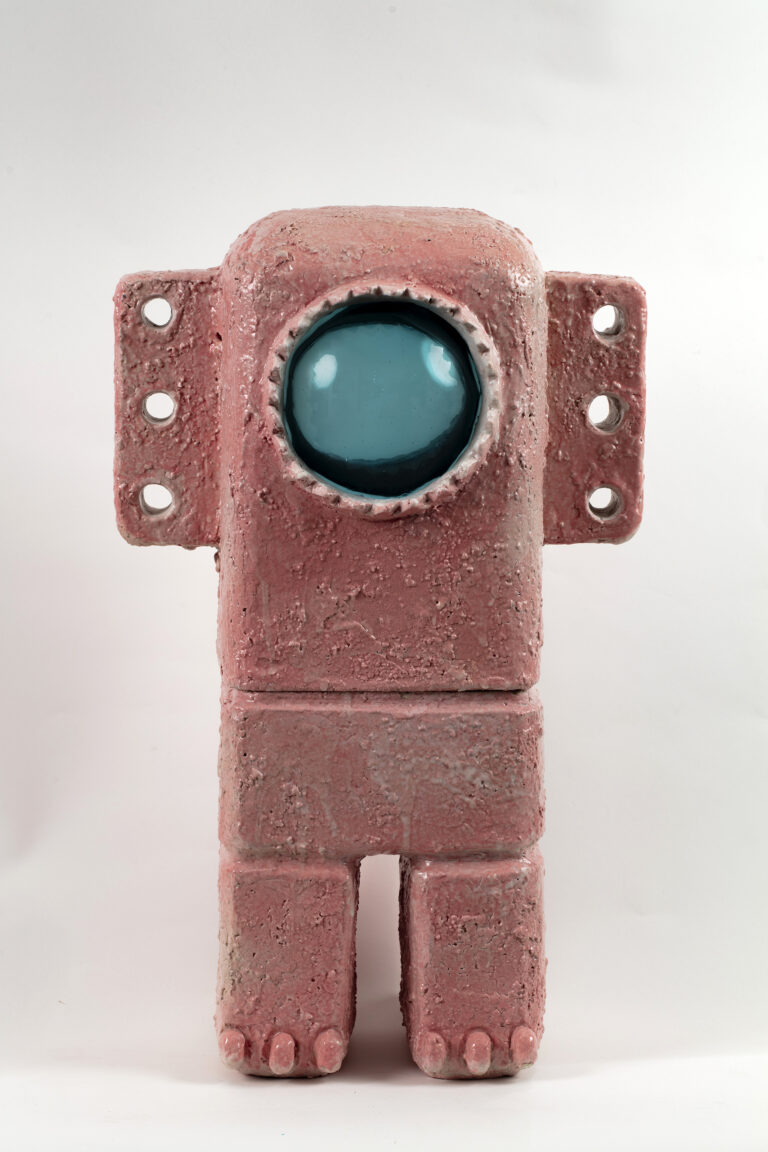
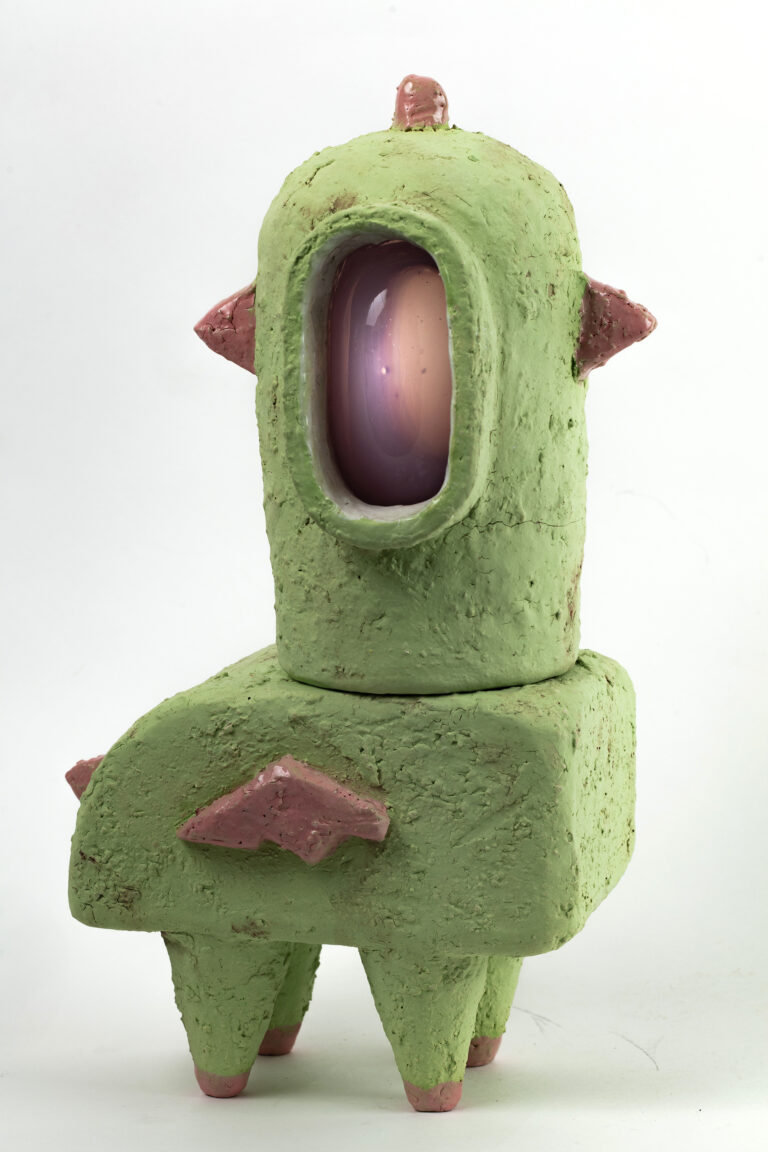
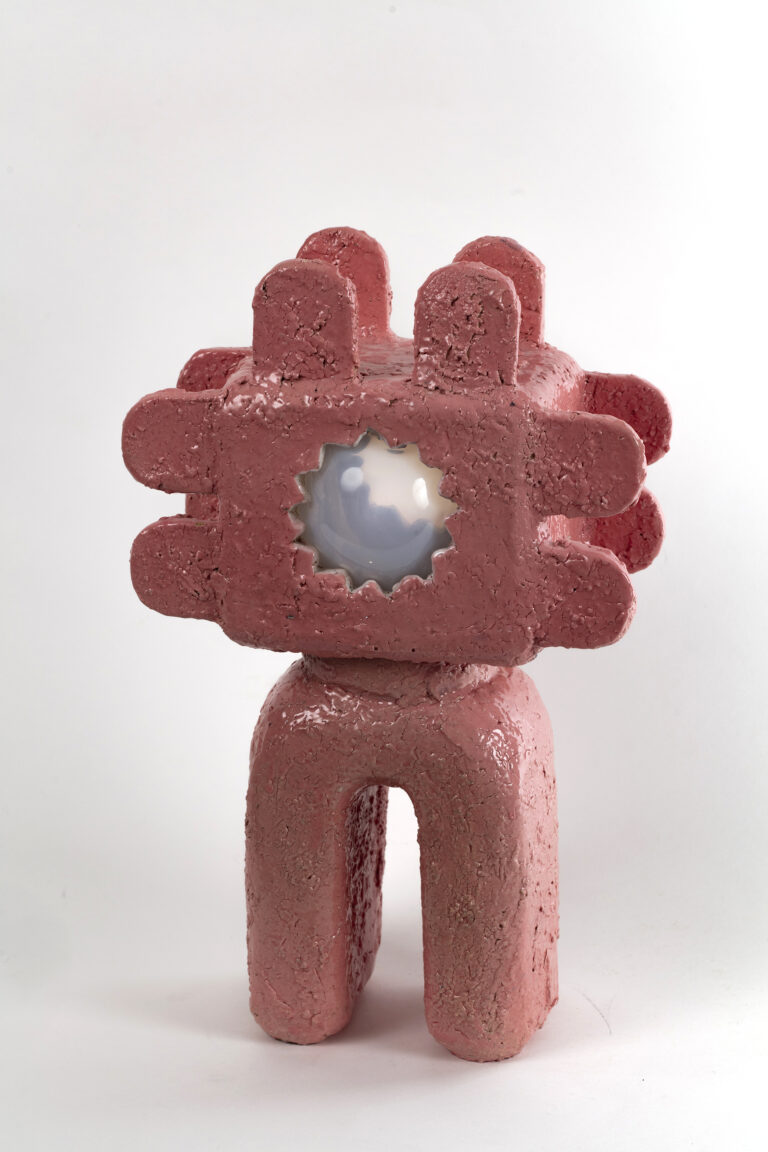
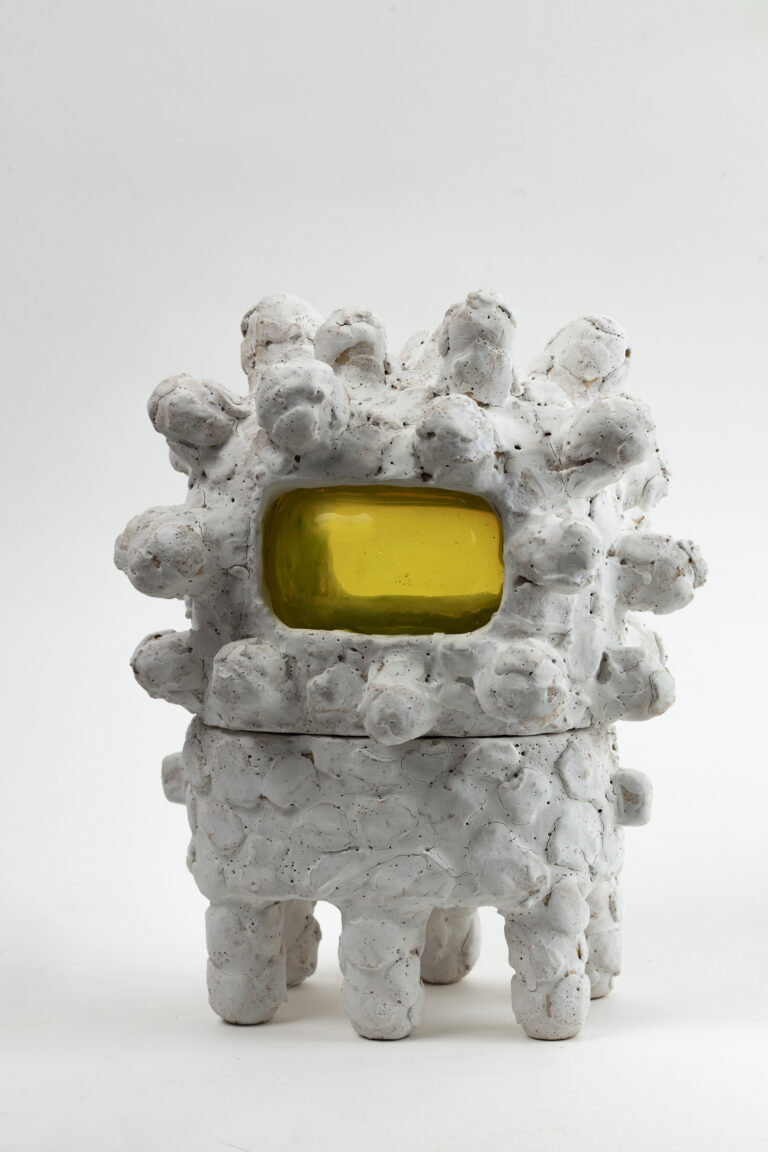
Based in northern Dordogne since 2015, the artist also draws inspiration from ancestral beliefs, literature, and nature. Through his repeated travels to South America and his interest in animist traditions, Arnauld Le Calvé has oriented his work towards the representation of symbolic figures and the sacred. From 2020 onwards, he developed his Totems series, composed of anthropomorphic figures with distinctive silhouettes. Their stoneware bodies, with granular surfaces sometimes reminiscent of volcanic stone or coral, contrast with the smooth, translucent volumes of blown glass, which often take the form of brightly coloured eyes. Combining archaic references with a contemporary imagination, these sculptures emerge from a skilful blend of poetry and mystery. His creative process remains largely instinctive, allowing forms to evolve freely without assigning them a definitive meaning.
Arnauld Le Calvé’s work has been presented at several events dedicated to contemporary creation and fine craftsmanship in France and abroad, attracting considerable interest for its quality and aesthetic character. These include Révélations and Maison & Objet in Paris, as well as various ceramic festivals throughout France. His works have also been exhibited in Japan. Through these sculptures, Arnauld Le Calvé has developed a distinctive artistic universe in which technical mastery meets imagination, inviting viewers to form their own interpretations of these creations that are at once familiar and enigmatic.