
FW Hasselblad & Co. was a prosperous import-export company based in Gothenburg, Sweden.
In the late nineteenth century, the founder's son, Arvid Viktor Hasselblad, encouraged his father to establish a photography division. At the time, it was merely a secondary branch, prompting the famous remark:
"I certainly don't think we'll make much money from it, but at least it will allow us to take photos for free."
Starting in 1888, Hasselblad began importing products from the Kodak company.
As photography grew in popularity, demand for both manufacturers increased, strengthening their relationship. Hasselblad's photography division expanded so rapidly that, in 1908, it became an independent company: Hasselblad's Fotografiska AB.
At that time, Kodak was already transforming photography by making it accessible to everyone.
Hasselblad began establishing laboratories and retail outlets to sell Kodak products.
Victor Hasselblad, the founder's grandson and heir, grew up with a passion for photography and a determination to improve existing equipment.
After completing an apprenticeship in the European camera industry, he worked in camera and film factories in the United States to deepen his understanding of photography.
It was not until 1940 that the first Hasselblad camera was developed.
That year, the Swedish government commissioned Victor Hasselblad to design an aerial reconnaissance camera for the air force. After the war, he adapted this design into a civilian camera with interchangeable components, and the first model was released in 1948.
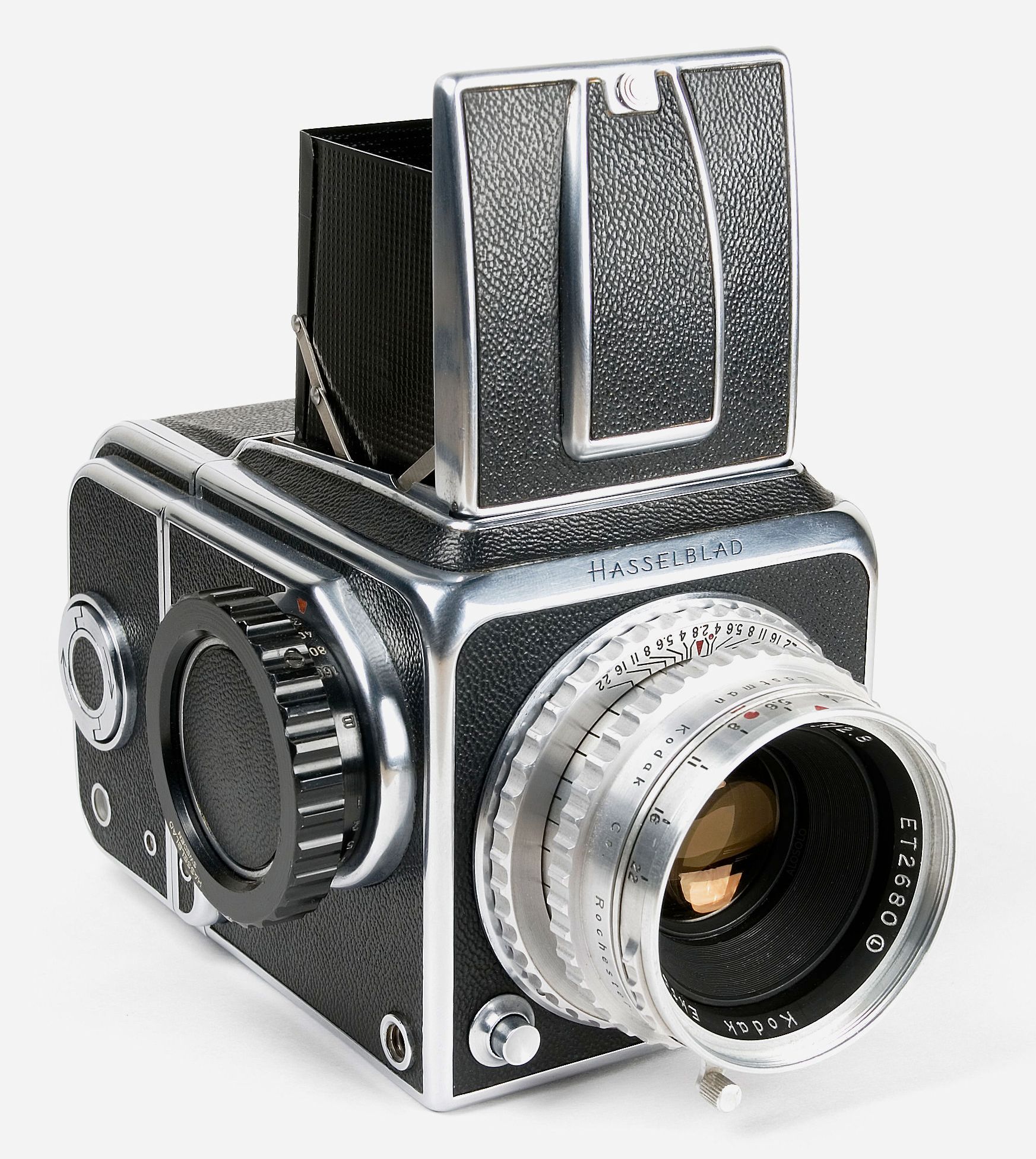
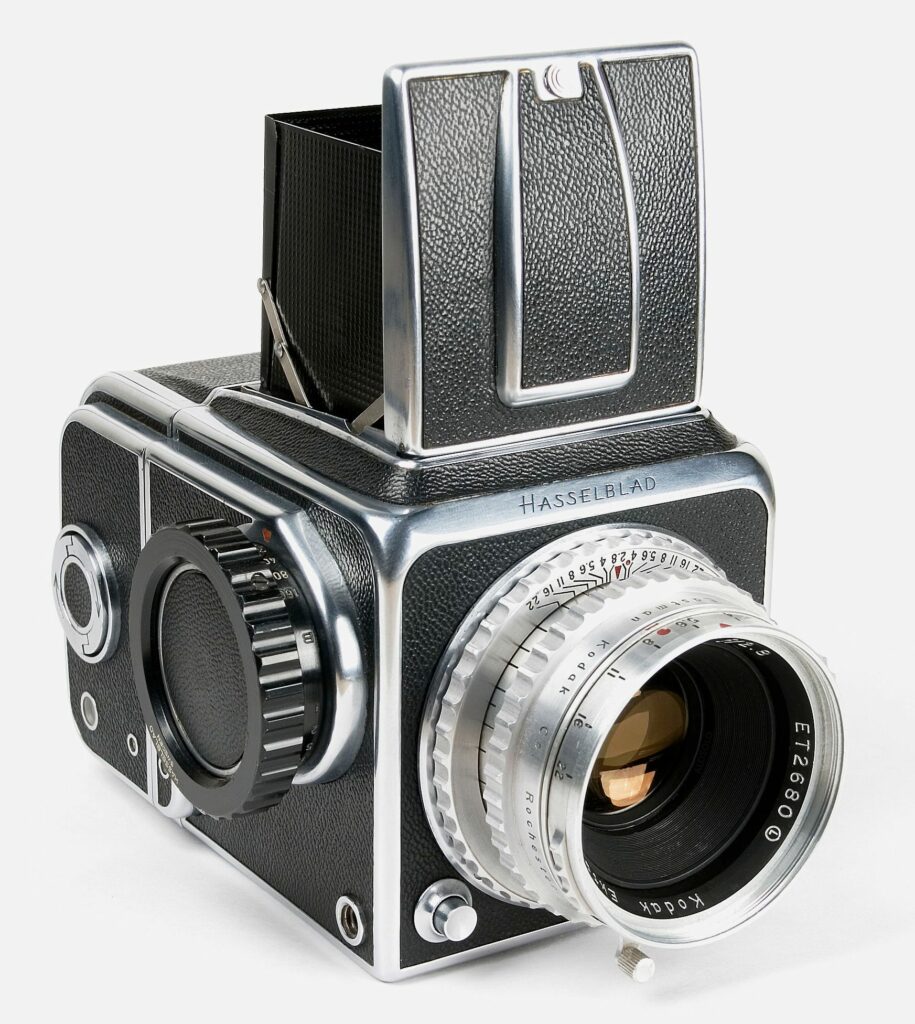
The first Hasselblad camera, released in 1948, introduced the brand's renowned modular camera system.
Hasselblad played a key role in the Apollo 11 mission, capturing the first photographs of humans on the Moon.
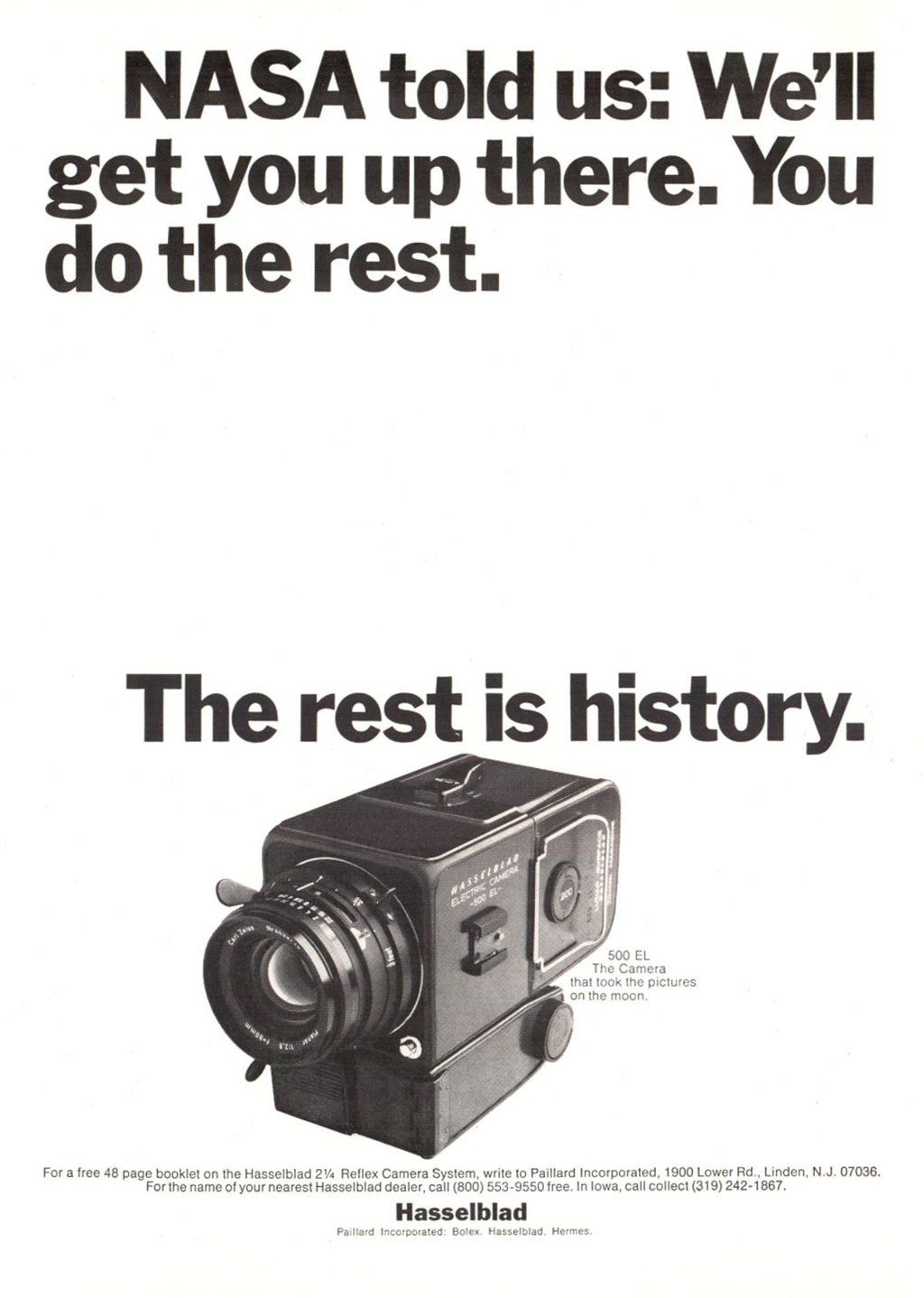
Hasselblad advertisement featuring the 500 EL, the camera model used during the Apollo 11 mission (c. 1969).
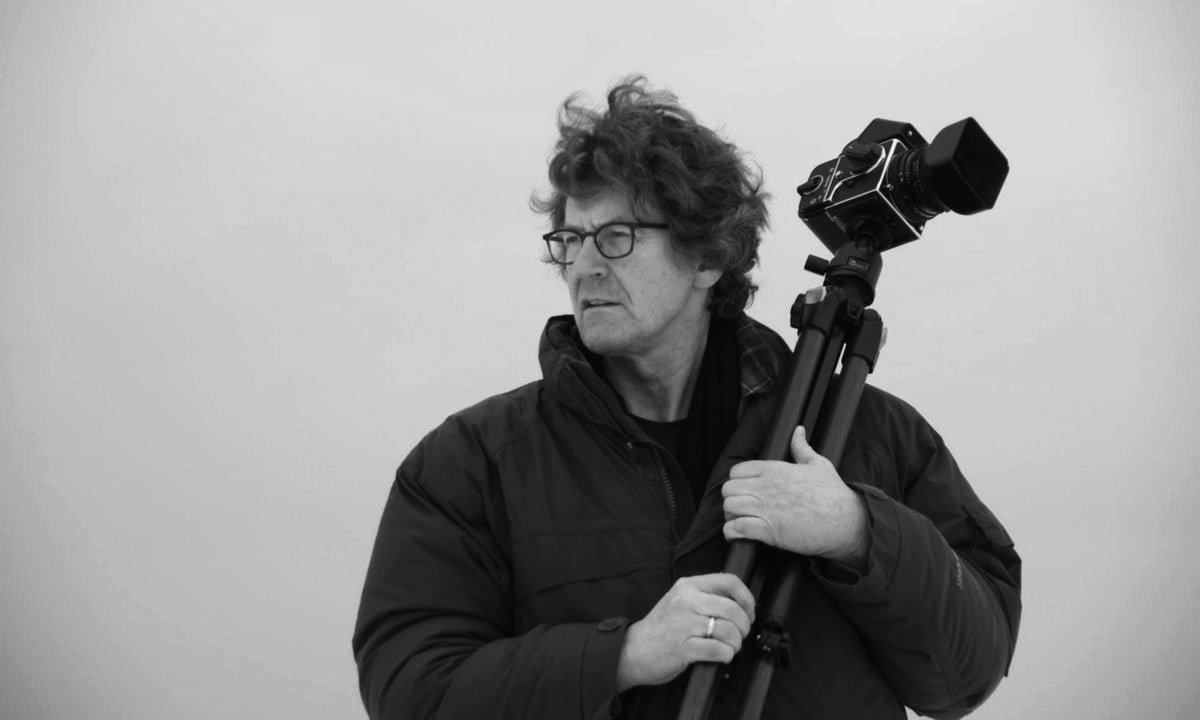
Discover more on our blog and explore the work of Michael Kenna, renowned for his striking black-and-white photographs captured with Hasselblad cameras.
Hasselblad.