
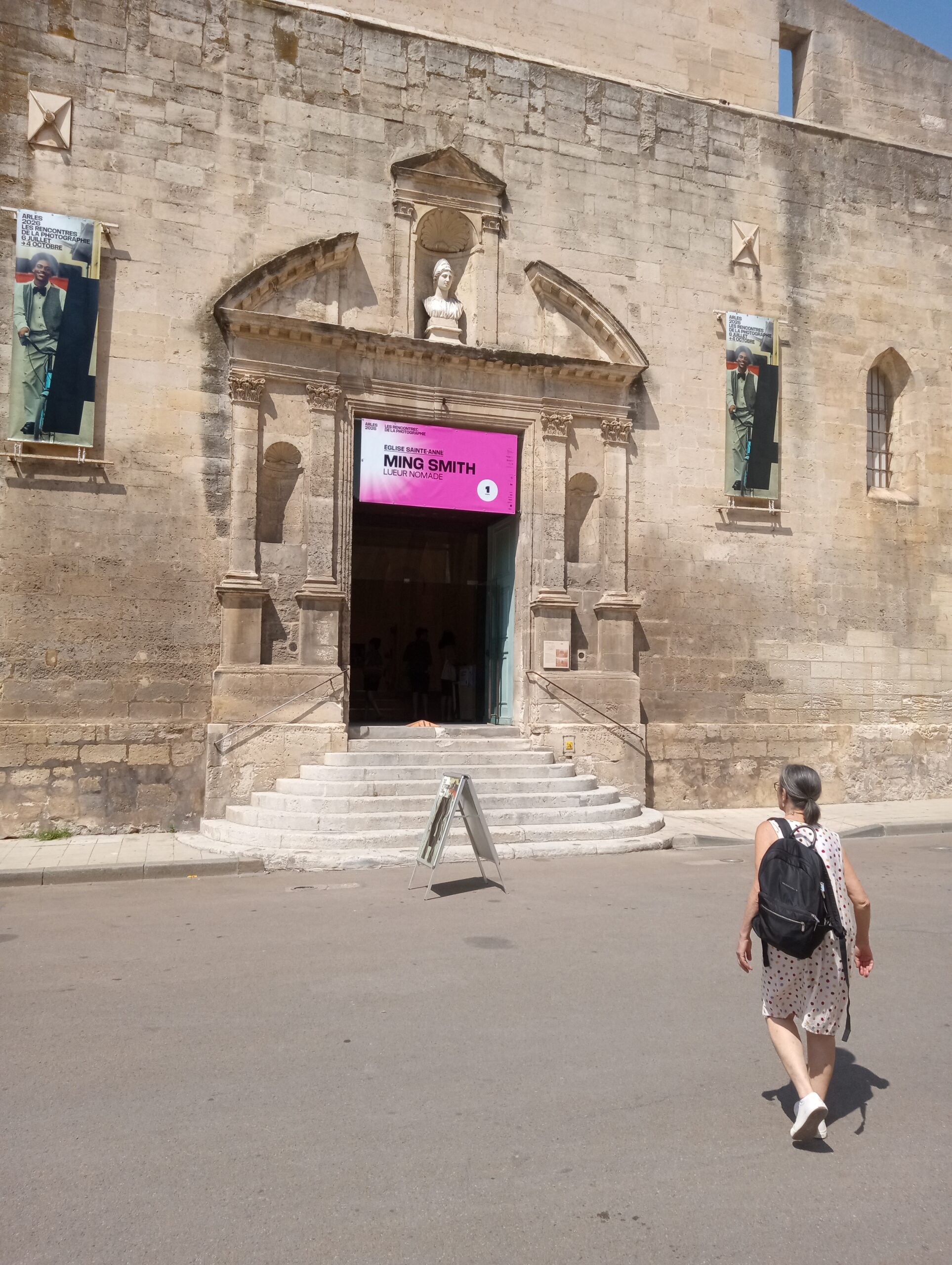
Exposition Ming Smith at the Église Sainte-Ann.
Nothing seemed to predestine Arles to become one of the world's leading centres for photography. At the time, photography was still struggling to gain recognition as a fully-fledged artistic discipline. Museums devoted little space to the medium, and the art market considered it of only marginal importance.
Everything changed in 1970 through the vision of three passionate advocates: photographer Lucien Clergue, writer Michel Tournier, and historian Jean-Maurice Rouquette, who founded Les Rencontres d'Arles.
Their ambition was simple yet revolutionary: to take photographs out of books and onto walls, encourage direct encounters between photographers and audiences, and create a forum for discussion and exchange.
The inaugural festival was a modest affair. Only three exhibitions were presented, and around one hundred visitors attended the gatherings held in Arles' Roman Theatre. Yet its founding idea proved transformative: to establish a place where photographers, critics, publishers, historians and the public could meet, exchange ideas and debate a medium that was still widely underestimated.
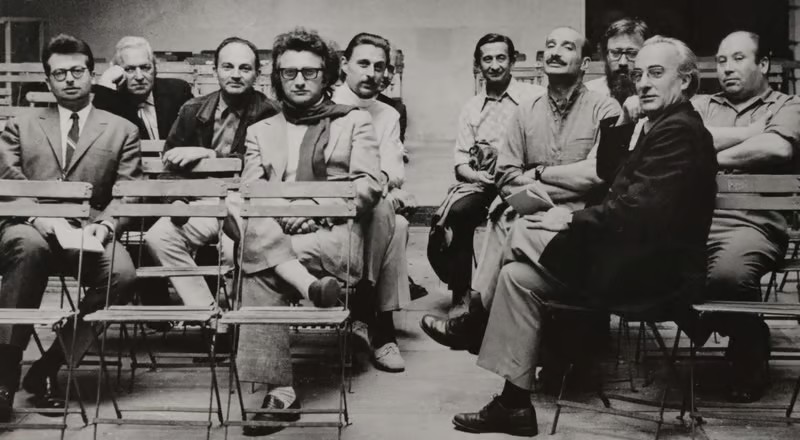
The founding team of Les Rencontres in 1970: Lucien Clergue, Jean-Maurice Rouquette and Michel Tournier. Photograph by Marc Pérard / Jean Dieuzaide.
Over the following decades, the festival grew rapidly. Some of the most influential photographers of the twentieth century—including Ansel Adams, Robert Mapplethorpe and Henri Cartier-Bresson—exhibited their work in Arles, while emerging artists found a platform that often proved decisive for their careers.
Les Rencontres also played a fundamental role in the institutional recognition of photography in France, contributing to its acceptance within museums, public collections and private collections alike.
As the festival expanded, it established itself as one of the most prestigious events in the international photographic calendar.
The introduction of artistic directors in the early 2000s brought greater curatorial coherence, with each edition exploring themes closely connected to contemporary social, political and cultural issues.
One of the defining characteristics of Les Rencontres is its ongoing dialogue with the city itself. Every summer, exhibitions inhabit remarkable heritage sites—former chapels, cloisters, industrial workshops, palaces, private mansions and abandoned buildings—offering visitors an immersive experience unlike any traditional museum.
Today, more than forty exhibitions are presented across some thirty venues, transforming Arles into one of the world's largest museums dedicated entirely to photography.
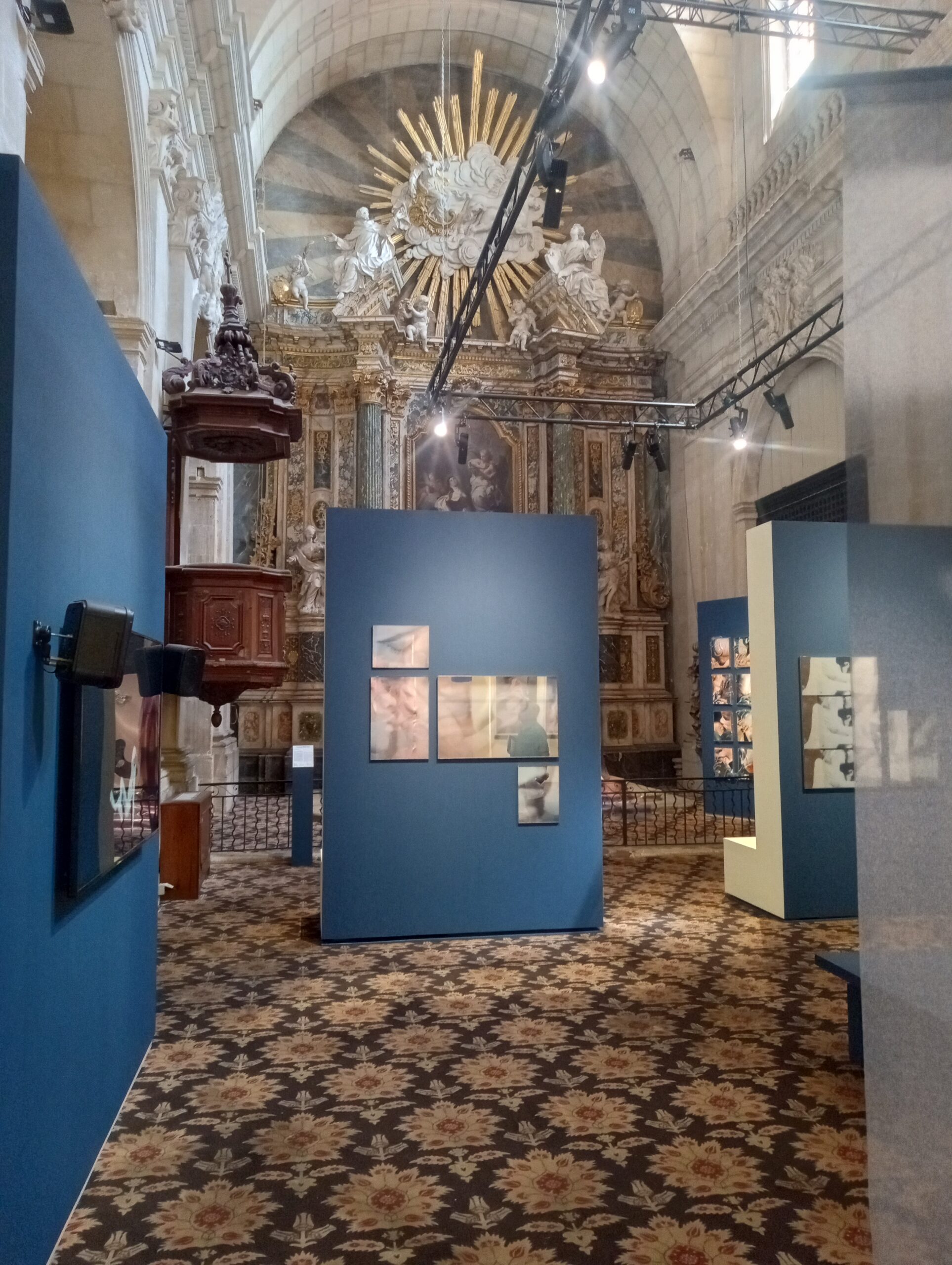
Chapelle de la Charité, The Cannibal Image, 2026.
Les Rencontres celebrates far more than the established masters of photography.
Each year, the festival provides an important platform for emerging artists, experimental projects, rediscovered archives and new forms of photographic practice.
Its exhibitions explore many of today's most pressing issues, including memory, identity, migration, ecology, political representation, artificial intelligence and evolving documentary practices. This diversity has established Les Rencontres as one of the foremost observatories of contemporary photography worldwide.
Alongside the exhibitions, the festival hosts lectures, evening projections, portfolio reviews, professional meetings, workshops and prestigious awards, making Arles an essential destination for photographers, curators, collectors and image professionals from across the globe.
Over the past five decades, the city of Arles has played a defining role in establishing photography as a medium worthy of exhibition, scholarship and artistic dialogue.
Today, that photographic legacy extends far beyond the city itself, inspiring cultural initiatives throughout the region.
It is in this spirit that Galerie Rousset was honoured to present Landscapes of South Korea, an exhibition of works by the internationally acclaimed master of black-and-white silver gelatin photography, Michael Kenna, from 5 June to 15 August 2026.
Centred on South Korea, the exhibition formed part of a broader cultural dialogue that resonated on both national and local levels, celebrating 140 years of diplomatic relations between France and South Korea, while also echoing the prominence of Korean culture during the 2026 Festival d'Avignon, where Korean was featured as the festival's invited language.
To discover more about Michael Kenna's Landscapes of South Korea and the silver gelatin prints presented by Galerie Rousset, please click here.